
Learn the language of automation.
A simple guide to the terms we use every day. Clear explanations to help you understand how the technology works.
Agents
Software that uses an LLM plus tools to plan and execute tasks toward a goal.
Tags: Basics, SystemsAI Alignment
The field of ensuring AI systems do what humans actually want them to do.
Tags: SafetyAI Analytics
Measuring how an AI system performs so you can improve quality, cost, and safety.
Tags: Analytics, BasicsAI Automation
Automations powered by models that can read, decide, and act with your data.
Tags: Automation, SystemsAI Chat Interface
A chat-shaped surface that lets users talk to an AI inside your product.
Tags: Assistants, UXAI Compliance
Meeting legal and policy requirements when you build and run AI features.
Tags: Compliance, RiskAI Decision Making
Using models to choose or recommend actions based on data and goals.
Tags: Product, BasicsAI Deployment
The process of serving a trained model so real users and systems can call it.
Tags: Ops, BasicsAI Engine
The core service or model that powers AI features behind the scenes.
Tags: Basics, ModelingAI Governance
Policies, processes, and oversight that guide how AI is built and used.
Tags: Governance, RiskAI Hallucination
When an AI confidently makes up facts or details that are not grounded in real data.
Tags: Risks, LLMsAI Inference
Running a trained model to get an output for a real request.
Tags: Ops, BasicsAI Integration
Connecting an AI model to your product or process so it can act on real data.
Tags: Basics, IntegrationsAI Knowledge Base
A living library of answers and sources that an AI can search to respond accurately.
Tags: Data, DocsAI Model
The learned function that maps inputs to predictions, decisions, or generated content.
Tags: Basics, ModelingAI Monitoring
Watching model quality, cost, and safety in production so you can react fast.
Tags: Ops, AnalyticsAI Optimization
Tuning prompts, models, and settings to improve quality, speed, and cost.
Tags: Ops, ProductAI Personalization
Using AI to tailor content and actions to each person’s context and history.
Tags: Product, BasicsAI Platform
A set of tools and services that let you build, ship, and manage AI features in one place.
Tags: Platforms, SystemsAI Prediction
Using a model to forecast an outcome or score before it happens.
Tags: Product, MLAI Recommendation
Models that suggest the next best item, action, or piece of content.
Tags: Product, BasicsAI Search
Search that understands meaning, not just keywords, to surface the best answer fast.
Tags: Search, RAGAI Security
Protecting models, data, and outputs from abuse, leaks, and tampering.
Tags: Security, GovernanceAI Software
Software that bakes AI into the product so users get smarter help by default.
Tags: Basics, ProductsAI System
All the pieces that make an AI feature work: models, data, tools, and guardrails together.
Tags: Basics, SystemsAI Temperature
A setting that controls how predictable or creative an AI model’s outputs are.
Tags: LLMs, SettingsAI Tool
A focused app or feature that uses AI to solve one job well.
Tags: Basics, AssistantsAI Training
Teaching a model with data and feedback so it learns patterns that generalize.
Tags: Modeling, BasicsAI Wrapper
An application that adds a user interface on top of an existing AI model.
Tags: ProductsAlgorithmic Bias
When AI creates unfair outcomes because of prejudices in its training data.
Tags: SafetyAnswer Engine Optimization (AEO)
Why ranking on traditional search engines is fading, and how optimizing for AI chat assistants is the new frontier.
Tags: AI Search, Content Marketing, ChatGPT, ClaudeAPI
A set of rules that let one piece of software talk to another.
Tags: Basics, IntegrationsArtificial General Intelligence (AGI)
A hypothetical AI that can learn and solve any intellectual task a human can.
Tags: ConceptsAugmentation
The process of using AI to enhance human capabilities and productivity rather than replacing them.
Tags: Strategy, Human-AIAutomation
A set of steps that run on their own so work moves forward without manual clicks.
Tags: Basics, SystemsChain of Thought (CoT)
A prompting technique where the AI explains its reasoning step-by-step before giving an answer.
Tags: PromptingChatbot
A conversational interface that lets people talk to software in plain language.
Tags: Basics, AssistantsComputer Vision
Teaching software to interpret images and video so it can detect, classify, and describe what it sees.
Tags: Basics, MLContext Caching
Saving the 'memory' of a long conversation or document so you don't have to re-process it every time.
Tags: OptimizationContext window
The maximum amount of tokens an LLM can consider at once (input + output).
Tags: Basics, LLMsCopilot
An AI assistant that works alongside you to suggest improvements or automate tasks.
Tags: BasicsCost Structure
The transformation of business expenses from variable labor costs to fixed, scalable software costs.
Tags: Business, EconomicsCRM
Software that tracks contacts, deals, and customer history in one place.
Tags: Business, ToolsData Source
The place your AI or app pulls truth from: a database, CRM, wiki, or file store.
Tags: Data, BasicsDeep Learning
A subset of machine learning that uses multi-layered neural networks to learn from vast amounts of data.
Tags: MechanicsDeepfake
Synthetic media where a person's likeness is convincingly swapped or generated by AI.
Tags: SafetyFew-Shot Prompting
Giving the AI a few examples of what you want before asking it to do the task.
Tags: PromptingFine-tuning
The process of training a pre-existing AI model on specific data to make it an expert.
Tags: MechanicsFoundation Model
A large-scale AI model trained on vast data that serves as a base for many applications.
Tags: ConceptsFunction Calling
The ability of an AI to connect to external tools and execute code rather than just talking.
Tags: CapabilitiesGenerative AI
Models that create new text, images, code, audio, or video from patterns they learned.
Tags: Basics, LLMsGEO
Generative Engine Optimization: tuning content so generative search and chat pick it up accurately.
Tags: Search, MarketingGPU Cluster
Thousands of graphics cards linked together to act as one supercomputer for training AI.
Tags: HardwareGrounding
Anchoring an AI's responses in real-world facts or specific data to prevent fabrication.
Tags: ReliabilityInference
The moment the AI actually 'thinks' and produces an output after you hit enter.
Tags: MechanicsInformation Asymmetry
The competitive advantage gained by businesses that use AI to process, analyze, and act on data faster than their competitors.
Tags: Economics, StrategyLabor Substitution
The direct replacement of human tasks and roles with automated AI systems.
Tags: Strategy, EconomicsLatency (Time to First Token)
The delay between sending a request and seeing the first word of the response.
Tags: PerformanceLLM
A Large Language Model: a neural network trained to predict the next token and generate text.
Tags: Basics, LLMsLLM Marketing
Using language models to plan, create, and personalize marketing at scale.
Tags: Marketing, LLMsLoss Function
The mathematical 'scorecard' an AI uses during training to measure how wrong its guess was.
Tags: TrainingLPU (Language Processing Unit)
Thinking chips designed specifically for running LLMs at extreme speeds.
Tags: HardwareMachine Learning
Using data and math to let software learn patterns instead of hardcoding rules.
Tags: Basics, MLMixture of Experts (MoE)
A architecture that picks the best specialized 'expert' models for each part of a query.
Tags: ArchitectureMultimodal AI
AI that can understand and generate multiple types of media, like text, images, and audio.
Tags: ConceptsNarrow AI (Weak AI)
AI designed to perform a specific task very well, but unable to do anything else.
Tags: ConceptsNatural Language Processing
Techniques that let software understand, generate, and work with human language.
Tags: Basics, MLNeural Network
A computer system designed to mimic the way the human brain learns and processes information.
Tags: MechanicsParameters
The internal variables or 'settings' learned by the model during training.
Tags: ArchitecturePrompt
The input instructions and context you give an LLM.
Tags: Basics, PromptingPrompt Engineering
The skill of crafting inputs to get the best possible output from an AI model.
Tags: SkillsSentiment Analysis
AI that determines the emotional tone behind a piece of text.
Tags: ConceptsSEO
Search Engine Optimization: helping web content rank and get discovered in traditional search.
Tags: Search, MarketingSLM (Small Language Model)
A compact AI model designed for efficiency and specific tasks rather than general knowledge.
Tags: ModelsSupervised Learning
Training AI using labeled examples, like a teacher with an answer key.
Tags: MechanicsSynthetic Data
Fake data created by AI to train other AI models.
Tags: TrainingSystem Prompt
The hidden 'master instruction' given to an AI that defines its persona and rules.
Tags: PromptingTokens
The chunks of text an LLM reads and generates; cost and limits are usually token-based.
Tags: Basics, LLMsTransformer
The groundbreaking architecture introduced by Google in 2017 that made modern Generative AI possible.
Tags: HistoryTuring Test
A test to determine if a machine can exhibit behavior indistinguishable from a human.
Tags: HistoryIt's Straightforward
90-Day Roadmap
We audit your current position, analyze your market, and build a custom plan to reach your goals. Most of our partners see significant results within the first 90 days.
We Handle Everything
Daily optimizations, content posting and technical fixes. We take care of the technical stuff so you can enjoy the results.
Track Your Growth
You see exactly how much closer you are to your goals each week. We track the increase in revenue and engagement, providing clear updates so you always know your progress.
Why choose Top Automator
over everyone else?
Other Agencies
Top Automator
Businesses we helped
Triple Shot Services
Easy Homesource
Red-Engage
HermQ
AI Services Website
Fanzsocial
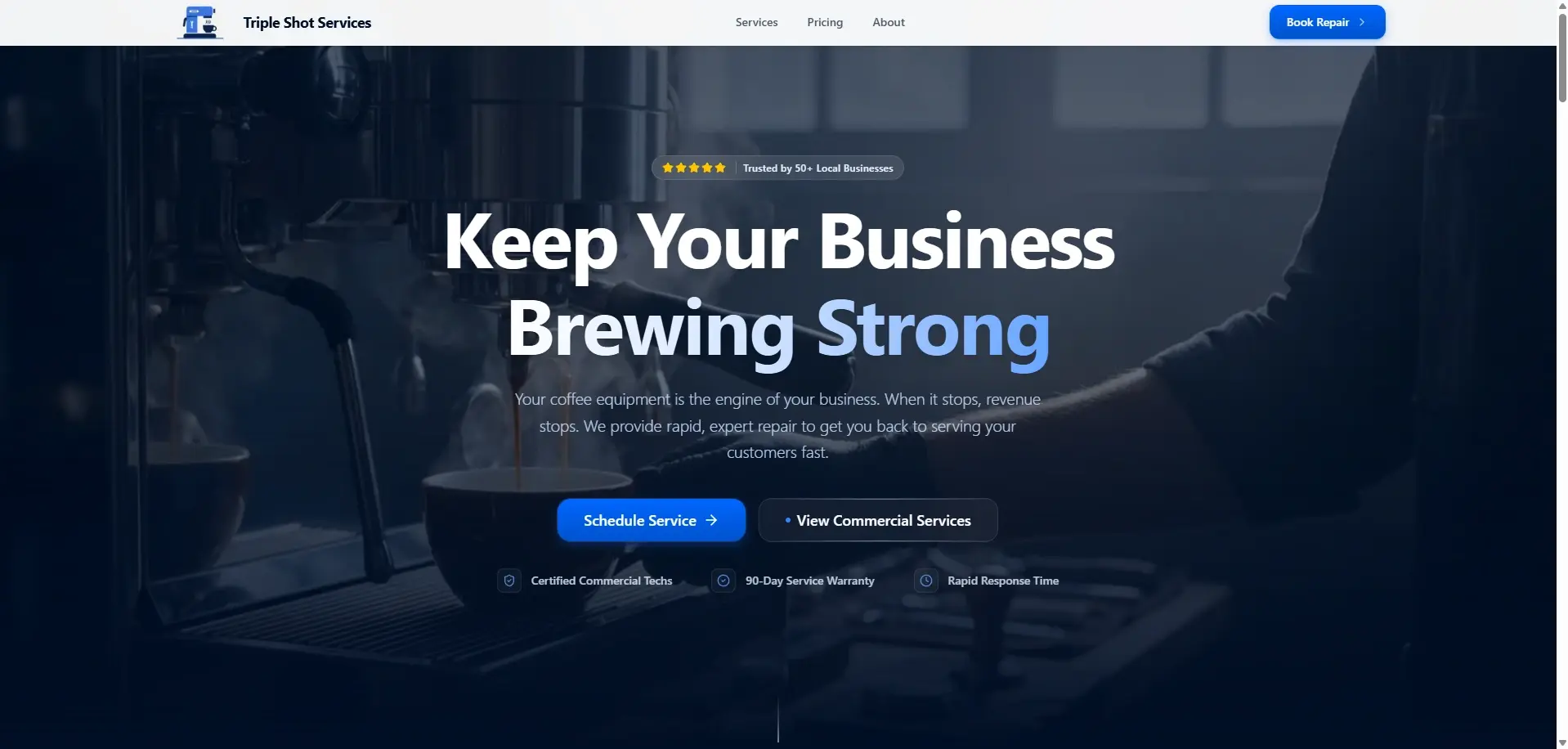
Triple Shot Services
Triple Shot ServicesTriple Shot Services
We reached out to Triple Shot Services because we knew we could help their coffee repair business look even more professional. They saw the value in a redesign right away, so we built a fresh site that is easy for their customers to navigate. We also remade their logo to give them a more established look and took care of the search engine details they were missing so they can finally get found online. It was a joy to work with a team that cares so much about their craft, and we are proud to help their business stand out with a look that matches their high standards.

Easy HomesourceEasy Homesource
This project began with a new website that the Easy Homesource team really loved. Before the site, they were mostly getting leads from billboards, but after we set up the new contact form, they generated 124 interested buyers in 7 months. This success led to an amazing journey where we now handle their site updates and custom software. It has been a joy working with their team and seeing more and more leads come in as the site grows.
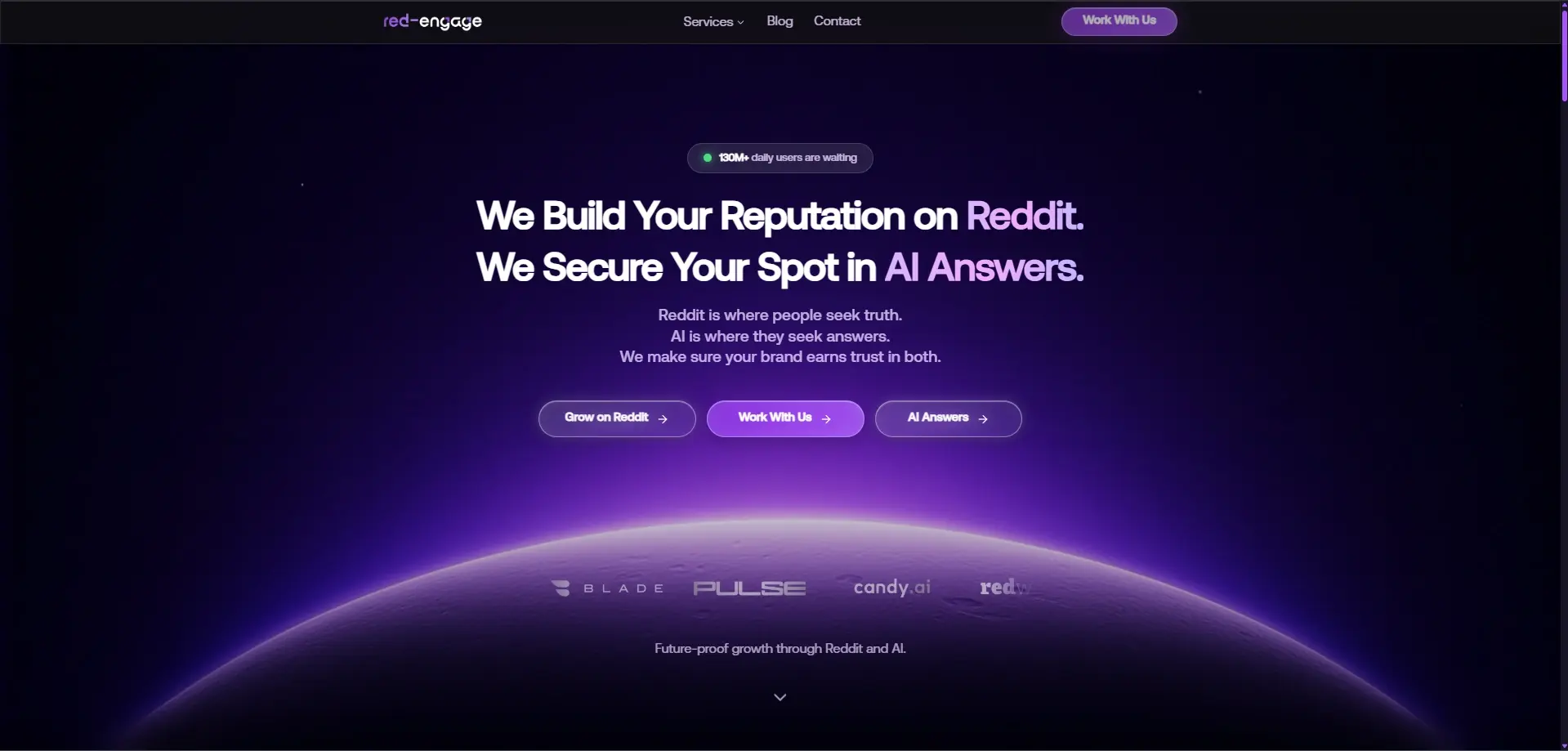
Red-EngageRed-Engage
Red-Engage started with just a single landing page that looked great in some spots but was mostly unfinished. We stepped in to rebuild the whole site from the ground up, making it feel high-end and professional while adding a new blog and plenty of helpful content. We also added dedicated pages for their Reddit and AI marketing services so visitors can easily see exactly how they help. It was a real joy to work with such a young and smart team to bring this space-themed site to life.
Need Custom Solutions?
Click the button below to enter your business details. We will review your current systems and reach out with a clear, actionable plan to automate your processes, build your digital presence, or grow your revenue.
No obligations, just real advice.
Get The FREE Estimate